

With the use of environment friendly herbal sanitizer, we offer reliable Fly Control Services. Our services are rendered as per the size of the affected area, labor and personal choices of our clients. The control procedures depend on the size of the area infected, labor and personal choices of our clients. These sanitizers prevent the surroundings from getting infected by multiple insect diseases. We ensure that the flies get eradicated, which in turn avoid the spreading of multiple insect diseases in the surroundings.
There are over 120,000 species of flies worldwide. Flies are considered pests because they pose a health risk to humans, pets and livestock. They can infest your home or business and spread diseases like Salmonella and E. coli. A few species may even bite humans and animals.
If a small fly problem is left uncontrolled, it has the potential to turn into a serious infestation. Some fly species are able to mature from eggs to adults in just seven days. There are simple ways you can identify the signs of a fly infestation and reduce the need for fly control. Taking a proactive approach with deterrent measures will also help you avoid costly treatments.
House Fly
The common house fly is a dull gray fly, ¼-inch long with four dark stripes on the middle section (thorax) of its body. House flies typically lay eggs on animal feces and garbage.
Blow Flies
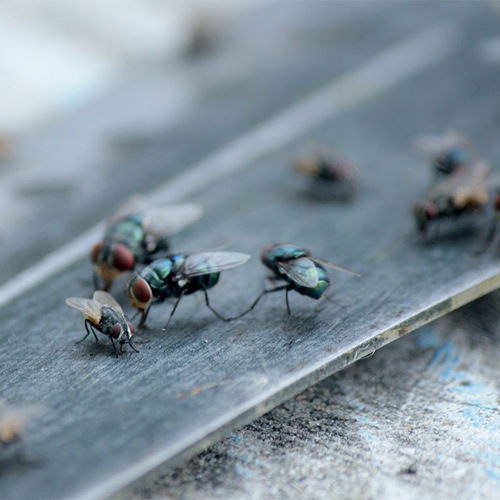
Blow flies develop larvae inside the bodies of dead animals. They also are attracted to garbage. They have been called “bottle flies” because their shiny blue and green color resemble colored glass bottles, Large numbers of these flies indoors usually indicates the presence of a dead animal such as a mouse or bird inside the structure.
Fruit Flies
Fruit flies are attracted to sweet or fermented liquids such as liquor, syrup, soda pop and vinegar, in addition to ripening/rotting fruit. Females lay eggs in and around these materials upon which their tiny larvae feed. The gnat-sized adults typically have tan-colored bodies and red eyes.
Control & Prevention Tips
1. Always keep your surrounding clean.
2. Wipe off food remains spilled on the ground, kitchen slabs, dining tables, etc.
3. Dispose any old garbage, clothes and other waste materials.
4 Wash all fruits and vegetables as they may carry eggs of pest.