



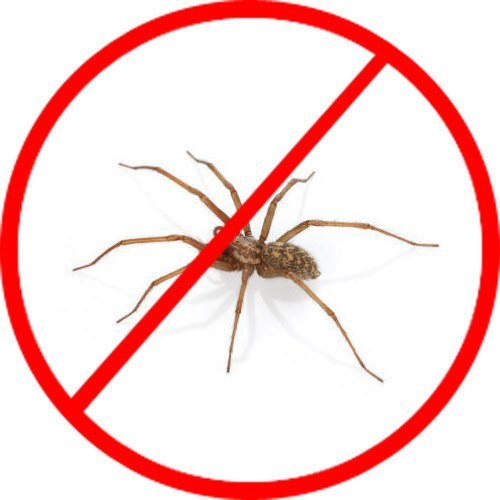
We offer effective Spider Pest Control Service and help in restricting the spiders that are commonly found in wall & ceiling corners. In an efficient spider control, sanitation plays a vital role with regular clean up of places which are not used very often & elevated places. Our experienced professionals are backed with optimum quality chemicals and gels. Our services are highly appreciated by our domestic as well as commercial clients for timely services and market leading prices.
How to control house spiders?
1. Spider control cannot be done to perfection. Chemicals are not very effective against spiders, nor do the spiders readily pick up pesticides. So just spraying pesticides is not a great defence against spiders. With their long legs, Spiders can keep their bellies well above the ground, so sprayed insecticide residue on a surface will only touch their feet. But they don’t have a circulatory system that will carry the insecticide from the bottoms of their feet to the organs in their bodies that would cause them to die.
2. It is necessary to make contact with the insect through a direct spray, a newspaper, a shoe, or whatever is your weapon of choice. Spiders are not actually insects. True insects use their mouths to groom themselves, so they end up eating insecticide that gets on their feet, legs, and bodies. But spiders don’t routinely use their mouthparts to clean themselves. They clean their leg if there is a large particle stuck to it, but it’s not a habit that will guarantee pesticide will kill them. In addition, most spiders spend their entire lives sitting in webs,
The best way to control running and jumping spiders at home is to control their food sources around the house. Spiders eat other insects, so reducing the other insects around home will reduce their food sources, and spiders will be less interested in hanging around. Most spiders like to hang out near light sources, which helps them capture flying insects that are attracted to light. A web-spinning spider worth his salt will let his meals come to him; hunting spiders are more athletic—they really do run down their prey. A subcategory of hunting spiders is jumping spiders. They have more of a pouncing behaviour to capture their prey. The spiders with short, stubby legs are almost all of the jumping variety. The spiders with long – but not delicate – legs are the running spiders.
To get rid of spiders, get rid of all other bugs. Crack and crevice treatment with insecticides provide some control, but one can also use glue boards or sticky traps. These are non-pesticide capture mechanisms. Some can be folded into a box shape so that unintended items won’t get stuck to them. There are really no attractants in most of these glue traps. The sticky trap, or glue trap, just captures spiders – if they walk through the trap, they die. But one can’t cover much surface area with a trap, so one has to place them where the spiders are most likely to come to them. The most effective places to put glue traps are in dark, quiet areas. A closet is a good example, or between a bed and a wall, or by any piece of furniture – these are all common spider travel areas.